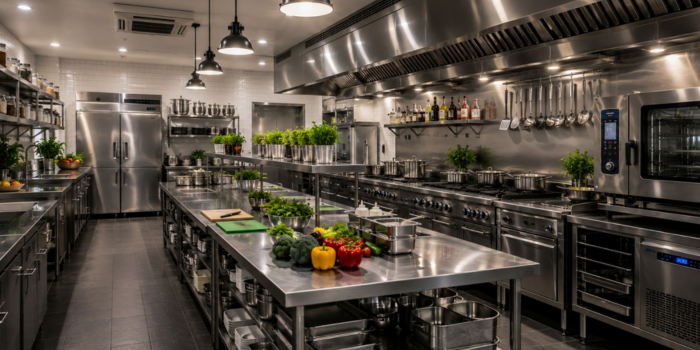
Catering businesses have a different style of working compared to regular restaurants. A catering team may prepare food for a small family function one day and a large wedding or corporate event the next day. Because of this, the kitchen needs equipment that can handle different quantities of food while maintaining speed, quality, and hygiene.
Choosing the right Catering Kitchen Equipment is an important decision for any catering business. Good equipment can make food preparation easier, reduce the workload of kitchen staff, and help the team complete large orders on time. It also helps maintain consistent food quality, which is important when serving a large number of guests.
Understanding Your Catering Requirements
Before buying equipment, it is important to understand the type of catering services you provide. A business that mainly handles weddings may need large cooking equipment, food warmers, storage systems, and transportation solutions. A small catering company that handles birthday parties and private events may need smaller and more flexible equipment.
The menu also plays an important role. If you prepare biryani, curries, fried foods, grilled dishes, bakery products, and desserts, your equipment requirements will be different. Understanding your menu first helps you choose equipment that is actually useful for your business.
Choosing the Right Cooking Equipment
Cooking equipment is the main part of a catering kitchen. When preparing food for a large number of people, normal household appliances are not suitable. Catering businesses need strong and reliable equipment that can handle continuous cooking.
Commercial cooking ranges, large cooking vessels, deep fryers, steamers, grills, ovens, and rice cookers can help chefs prepare large quantities of food more efficiently. Choosing the right equipment based on your expected order volume can reduce cooking time and make the entire operation smoother.
The Importance of Food Preparation Equipment
Food preparation can take a lot of time when cooking for hundreds of people. Cutting vegetables, grinding ingredients, mixing dough, slicing meat, and preparing other ingredients manually can increase the workload of kitchen staff.
Modern Commercial Food Preparation Equipment can make these tasks faster and easier. Food processors, vegetable cutters, mixers, grinders, slicers, and dough kneaders can reduce manual effort and allow employees to focus more on cooking and presentation.
Refrigeration and Storage
Proper storage is extremely important for catering businesses because large quantities of ingredients may need to be stored before cooking. Meat, seafood, vegetables, dairy products, sauces, and prepared ingredients must be kept under suitable conditions to maintain their freshness.
Commercial refrigerators, freezers, cold storage units, and stainless steel storage cabinets can help organize ingredients properly. Good storage planning also makes it easier for kitchen staff to find ingredients quickly during busy preparation periods.
Equipment for Outdoor Catering
Many catering businesses prepare food at different locations. Weddings, parties, corporate events, and outdoor functions may require the kitchen team to travel with cooking equipment.
Portable cooking ranges, mobile preparation tables, food warmers, insulated food containers, and mobile service counters can make outdoor catering easier. Equipment used for outdoor events should be durable, easy to move, and simple to set up.
Keeping Food Warm Before Serving
Preparing food is only one part of catering. Food may need to remain warm for some time before it reaches the guests. This is especially important for buffet services and large events.
Food warmers, bain maries, heated cabinets, insulated containers, and chafing dishes can help maintain the required temperature. Using suitable food holding equipment helps preserve the taste, texture, and quality of prepared food.
Creating a Smooth Kitchen Workflow
A catering kitchen should have a simple and clear workflow. Ingredients should move from storage to preparation, then to cooking and food holding. After cooking, the food can be packed or transported to the event location.
A well-planned workflow reduces unnecessary movement and helps employees complete their work faster. When the kitchen is properly organized, the team can manage large orders with less confusion, especially during busy event schedules.
Choosing Durable Equipment
Catering equipment is used frequently and often handles heavy workloads. Because of this, durability should be an important factor when choosing equipment.
Stainless steel is commonly used in professional kitchens because it is strong, easy to clean, resistant to corrosion, and suitable for food preparation. High-quality Professional Catering Equipment can provide better performance and a longer service life compared to low-quality alternatives.
Energy Efficiency Matters
Catering kitchens can use a large amount of electricity, gas, and water because food is often prepared in large quantities. Choosing energy-efficient equipment can help control monthly operating expenses.
Modern equipment can provide faster heating, better temperature control, and lower energy consumption. Although energy-efficient equipment may cost more initially, it can provide savings over a longer period.
Proper Ventilation for Catering Kitchens
Cooking large quantities of food produces heat, smoke, steam, and grease. A good ventilation system is therefore important for maintaining a comfortable kitchen environment.
Exhaust hoods, grease filters, ventilation systems, and proper ducting can help remove heat and smoke from the cooking area. Good ventilation also helps keep the kitchen cleaner and reduces grease buildup around equipment.
Maintenance and After-Sales Support
Buying equipment is not the end of the process. Regular maintenance is important for keeping catering equipment in good working condition.
Before purchasing, it is useful to understand the warranty, installation support, spare parts availability, and servicing options. Reliable after-sales support can reduce downtime if equipment develops a problem during an important catering season.
Planning Your Budget
A catering business does not need to purchase every type of equipment available in the market. The better approach is to identify the equipment that is most important for your menu and daily operations.
Cooking equipment, preparation equipment, refrigeration, storage, food holding systems, and transportation equipment should be considered based on actual business requirements. Investing in good-quality equipment can provide better long-term value than repeatedly replacing low-cost products.
Preparing for Business Growth
A catering business can grow quickly when it receives regular wedding, corporate, and private event orders. Therefore, equipment selection should also consider future requirements.
If you expect your business to handle larger events in the future, choosing equipment with suitable capacity can help you manage increased demand without completely redesigning the kitchen. A flexible setup also makes it easier to add new menu items and services later.
Conclusion
The right kitchen setup can make a major difference in the success of a catering business. From food preparation and cooking to storage, food holding, transportation, and serving, every stage needs reliable equipment.
Choosing suitable Catering Kitchen Equipment helps reduce preparation time, improve staff productivity, maintain food quality, and handle large orders more efficiently. Durable Professional Catering Equipment can also provide better long-term value and reduce frequent maintenance or replacement costs. For a growing catering business, investing in quality equipment is not simply an expense. It is an investment that can improve daily operations, support larger events, and help the business deliver a better experience to every customer