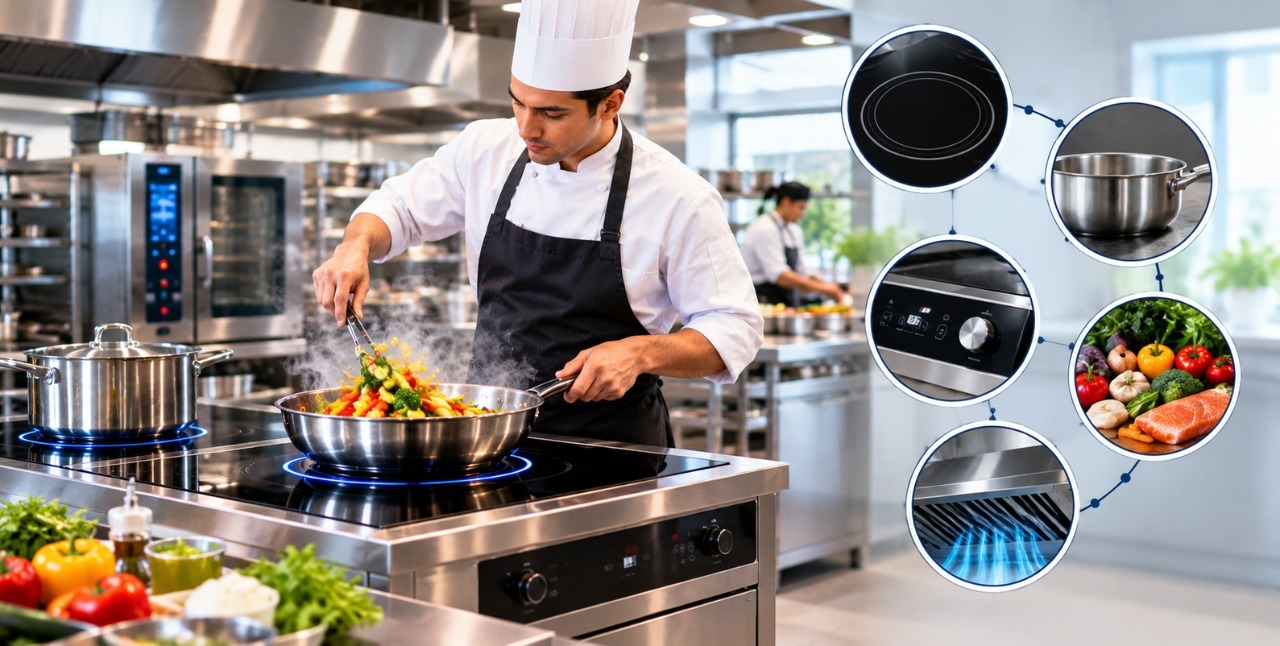
Modern commercial kitchens are constantly evolving with new technologies that make cooking faster, safer, and more efficient. One of the most important developments in professional kitchens is induction cooking technology. Unlike traditional gas stoves, induction cooktops use electromagnetic energy to heat cookware directly, helping chefs maintain better control over cooking temperatures.
For restaurants, hotels, catering businesses, and other food service establishments, induction technology offers several advantages. From faster cooking to improved kitchen safety, it is changing how chefs work in busy commercial kitchens.
What Is Induction Cooking Technology?
Induction cooking is a modern cooking method that uses electromagnetic energy to heat compatible cookware. Instead of heating the cooking surface or producing an open flame, an induction cooktop transfers heat directly to the pan.
This technology allows chefs to control cooking temperatures more precisely. It is particularly useful in commercial kitchens where consistency, speed, and efficiency are essential.
With the growing demand for energy-efficient commercial kitchen equipment, induction cooktops are becoming an important option for restaurants and professional food preparation areas.
1. Faster Cooking and Better Kitchen Productivity
Speed is essential in commercial kitchens, especially during busy lunch and dinner hours. Traditional gas stoves may take longer to heat cookware, whereas induction cooktops transfer energy directly to compatible pans.
This allows chefs to heat ingredients quickly and reduce waiting time during food preparation.
In restaurants and hotels, faster heating can help kitchen staff manage multiple orders more efficiently. It also allows chefs to spend more time focusing on food quality, presentation, and customer requirements.
2. Precise Temperature Control for Better Cooking
Temperature control plays an important role in preparing high-quality dishes. Different ingredients require different cooking temperatures, and even small temperature changes can affect the final result.
Induction cooking provides precise temperature adjustments, allowing chefs to manage heat according to the requirements of each dish.
Whether preparing delicate sauces, sautéing vegetables, or simmering soups, chefs can adjust the temperature quickly. This helps maintain consistency and reduces the chances of overcooking or burning food.
For professional chefs, precise temperature control is particularly valuable when preparing dishes that require careful attention.
3. Improved Kitchen Safety
Safety is a major concern in commercial kitchens, where chefs work with hot equipment, sharp tools, and multiple cooking stations.
Traditional gas stoves use open flames, which can increase the risk of accidental burns and fire hazards. Induction cooktops eliminate the need for an open flame, making them a useful alternative for many professional kitchens.
Since the cookware receives most of the heat directly, the cooking surface generally remains cooler than a traditional gas burner. However, it can still become hot from contact with heated cookware.
This technology can help create a safer working environment when combined with proper kitchen practices and equipment maintenance.
4. Energy Efficiency in Commercial Kitchens
Energy consumption is an important consideration for restaurants, hotels, and catering businesses. Commercial kitchens often operate for long hours, making energy-efficient equipment valuable for managing operating costs.
Induction cooktops transfer heat directly to compatible cookware, reducing heat loss compared with many conventional cooking methods.
This can improve energy efficiency and reduce unnecessary heat generation in the kitchen. However, actual energy savings depend on the equipment, cooking practices, and electricity costs.
For businesses planning a new commercial kitchen, choosing energy-efficient cooking equipment can be an important part of long-term kitchen planning.
5. A More Comfortable Working Environment
Commercial kitchens can become extremely hot, particularly during peak working hours. Traditional cooking equipment releases heat into the surrounding environment, making it more difficult for kitchen staff to work comfortably.
Induction cooking produces less excess heat around the cooking station because energy is transferred directly to the cookware.
This can help reduce additional heat in the kitchen and create a more comfortable working environment for chefs and kitchen staff.
For restaurants with limited kitchen space or multiple cooking stations, reducing unnecessary heat can be especially useful.
6. Easier Cleaning and Maintenance
Maintaining cleanliness is essential in every professional kitchen. Food spills, oil splashes, and grease can accumulate around traditional cooking equipment, making cleaning a regular task.
Induction cooktops generally feature smooth, flat surfaces that are easier to wipe down after cooking. Since the cooking surface does not get as hot as a conventional burner during operation, some food spills are also less likely to burn onto it immediately.
Regular cleaning and proper maintenance help keep induction equipment in good working condition and support better kitchen hygiene.
7. Greater Flexibility in Modern Kitchen Design
Modern commercial kitchens require equipment that supports efficient movement, organised workstations, and effective space utilisation.
Induction cooking equipment is available in different configurations, making it suitable for various kitchen layouts. Depending on the model, it can be installed as a countertop unit or integrated into a commercial kitchen workstation.
This flexibility allows restaurant owners, hotel managers, and kitchen designers to plan cooking areas according to their operational requirements.
When designing a commercial kitchen, the placement of induction equipment should be considered alongside ventilation, electrical capacity, workflow, and the other cooking appliances.
8. Consistent Cooking Quality
Consistency is one of the most important factors in professional food preparation. Customers expect their favourite dishes to taste the same every time they visit a restaurant.
Induction technology allows chefs to make quick and accurate temperature adjustments. This helps them maintain consistent cooking conditions across different dishes.
When combined with standardised recipes and proper cooking techniques, induction equipment can help chefs achieve reliable results and maintain food quality during busy service hours.
Why Restaurants Are Considering Induction Cooking Equipment
As commercial kitchens become more technology-driven, restaurant owners are looking for equipment that supports productivity, safety, and efficient operations.
Induction cooking offers several practical benefits, including faster heating, precise temperature control, reduced excess heat, and easier cleaning.
However, businesses should also consider factors such as the initial equipment cost, electrical infrastructure, compatible cookware, and the type of food being prepared before choosing induction technology.
For restaurants planning a new kitchen or upgrading an existing one, consulting a professional commercial kitchen equipment supplier can help identify suitable solutions.
How Chef Style Kitchen Equipment Supports Modern Commercial Kitchens
Chef Style Kitchen Equipment provides commercial kitchen equipment solutions for professional food service establishments. From kitchen planning and equipment selection to fabrication and installation, having the right support can help businesses develop functional and efficient kitchen spaces.
When planning a commercial kitchen, selecting suitable cooking equipment is only one part of the process. Proper space utilisation, workflow planning, ventilation, and equipment placement are equally important for smooth daily operations.
Working with an experienced commercial kitchen equipment provider can help restaurant owners and hotel operators plan kitchens that meet their specific operational needs.
Conclusion
Induction technology is changing the way chefs work by offering faster heating, precise temperature control, improved safety, and better energy efficiency. It also helps reduce excess heat in the kitchen and makes cleaning easier.
For restaurants, hotels, and catering businesses, induction cooking can be a valuable addition to a modern commercial kitchen. By understanding its benefits and selecting equipment according to their cooking requirements, businesses can create more efficient and comfortable food preparation environments.
As commercial kitchen technology continues to develop, induction cooking is becoming an increasingly important option for chefs who want greater control over their cooking processes.
Choose the right commercial kitchen equipment to build a kitchen that supports your team, workflow, and cooking requirements.