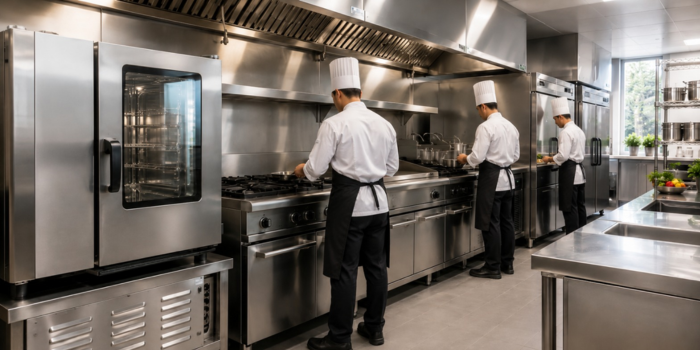
Every restaurant owner wants to make smart purchasing decisions that support business growth while keeping operating costs under control. Whether starting a new restaurant, upgrading an existing kitchen, or expanding a food service business, investing in the right equipment plays a crucial role in long-term success.
Buying commercial kitchen equipment is not simply about choosing the latest models or the lowest prices. The real value comes from selecting equipment that improves productivity, reduces operating expenses, increases food consistency, and delivers reliable performance for years. High-quality equipment becomes a long-term asset that supports daily operations while helping businesses maximize profitability.
Making a wise Commercial Kitchen Equipment Investment allows restaurants, hotels, cloud kitchens, and catering businesses to increase efficiency without unnecessary operating expenses. Understanding which equipment delivers the highest return helps business owners make informed purchasing decisions that continue to generate value long after installation.
Understanding Return on Investment in Commercial Kitchens
Return on investment, commonly known as ROI, measures how effectively an equipment purchase contributes to business performance over time.
A high-return investment typically offers:
- Lower operating costs
- Improved production capacity
- Reduced maintenance expenses
- Longer equipment lifespan
- Better energy efficiency
- Higher employee productivity
Rather than focusing only on the purchase price, businesses should evaluate the total value an equipment delivers throughout its working life.
Induction Cooking Equipment
Induction cooking technology has become one of the most valuable investments for modern commercial kitchens.
Unlike traditional cooking systems, induction technology transfers heat directly to compatible cookware, reducing energy waste and improving cooking speed.
Using Energy Efficient Kitchen Equipment provides several operational advantages.
Benefits include:
- Faster cooking performance
- Reduced electricity consumption
- Lower kitchen temperatures
- Improved workplace safety
- Consistent cooking results
- Easier cleaning and maintenance
Lower energy usage combined with faster food preparation allows businesses to recover their investment more quickly.
Combination Cooking Equipment
Combination cooking equipment performs multiple cooking functions within a single unit, helping businesses save both space and operational costs.
Advantages include:
- Steaming
- Baking
- Roasting
- Grilling
- Reheating
- Consistent temperature control
Multi-purpose equipment reduces the need to purchase separate appliances while improving kitchen flexibility.
High-Capacity Refrigeration Systems
Reliable refrigeration protects food quality while reducing waste.
Modern refrigeration systems help businesses:
- Maintain safe storage temperatures
- Extend ingredient freshness
- Improve inventory management
- Reduce food spoilage
- Lower maintenance costs
Proper refrigeration contributes directly to operational efficiency and customer satisfaction.
Food Preparation Equipment
Preparation often consumes a significant portion of daily kitchen operations.
Modern Restaurant Cooking Equipment designed for food preparation helps employees complete repetitive tasks quickly while maintaining consistency.
Examples include:
- Vegetable cutters
- Food processors
- Dough mixers
- Meat slicers
- Automatic peelers
Reducing manual preparation time allows staff to focus on higher-value activities during busy service periods.
Dishwashing Equipment
Cleaning operations are essential for maintaining hygiene and supporting continuous food production.
Commercial dishwashing systems provide:
- Faster cleaning cycles
- Lower water consumption
- Improved sanitation
- Reduced labour requirements
- Consistent cleaning quality
Efficient cleaning equipment helps restaurants maintain productivity throughout the day.
Storage Solutions
Well-organized storage contributes significantly to operational efficiency.
Effective storage systems include:
- Stainless steel shelving
- Mobile storage racks
- Ingredient containers
- Cold storage units
- Dry storage cabinets
Proper storage reduces clutter while improving inventory control and ingredient accessibility.
Equipment That Reduces Labour Costs
One of the greatest long-term benefits of modern kitchen equipment is reduced dependence on manual labour.
Automation helps businesses:
- Increase production speed
- Improve consistency
- Reduce repetitive tasks
- Minimize employee fatigue
- Improve overall productivity
Labour savings often contribute significantly to long-term return on investment.
Equipment That Lowers Operating Expenses
Reducing operational costs is one of the fastest ways to improve profitability.
Businesses can achieve Commercial Kitchen Cost Savings by investing in equipment that consumes less energy, requires minimal maintenance, and operates efficiently throughout the day.
Long-term savings may include:
- Lower electricity bills
- Reduced repair costs
- Less equipment downtime
- Lower food waste
- Improved productivity
Choosing reliable equipment provides financial benefits throughout its lifespan.
Factors to Consider Before Purchasing
Before making any equipment purchase, businesses should evaluate several important factors.
Questions to consider include:
- Will the equipment support future business growth?
- Is it suitable for daily production volume?
- How energy efficient is the equipment?
- Are replacement parts easily available?
- Does it require regular maintenance?
- Is after-sales support available?
Careful evaluation helps businesses make informed purchasing decisions.
Partner with Reliable Manufacturers
Selecting the right supplier is equally important as choosing the equipment itself.
Reliable manufacturers provide:
- Quality products
- Technical guidance
- Installation support
- Warranty coverage
- Maintenance assistance
- Long-term customer service
Choosing Professional Food Service Equipment from trusted manufacturers ensures businesses receive dependable products backed by professional support.
Long-Term Business Benefits
Restaurants that invest wisely often experience measurable improvements across multiple areas of their operations.
Benefits include:
- Increased production capacity
- Faster food preparation
- Better food consistency
- Reduced operating expenses
- Improved staff productivity
- Higher customer satisfaction
- Greater profitability
- Stronger business reputation
These improvements contribute to sustainable business growth over time.
Conclusion
Investing in commercial kitchen equipment should always be viewed as a long-term business decision rather than a short-term expense. The right equipment improves productivity, reduces operating costs, supports food quality, and creates a more efficient working environment for employees. Businesses that focus on quality, durability, energy efficiency, and operational performance are more likely to achieve a higher return on investment. By selecting equipment that aligns with both current needs and future growth, restaurants can build a reliable foundation for long-term success while continuing to deliver exceptional service to their customers