
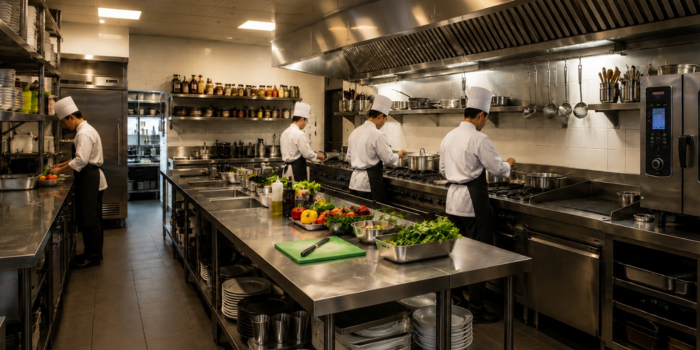
Institutional kitchens are different from normal restaurant kitchens. Schools, hospitals, colleges, factories, and canteens often need to prepare food for a large number of people every day. The kitchen must be able to handle high-volume cooking while maintaining hygiene, food quality, and proper organization.
Choosing the right Institutional Kitchen Equipment can make daily kitchen operations easier and more efficient. Good equipment helps reduce preparation time, supports large-scale cooking, and allows kitchen staff to manage meals smoothly even during busy hours.
Why Institutional Kitchens Need Proper Equipment
A school kitchen may need to prepare hundreds of meals within a short period. A hospital kitchen may need to prepare different meals based on patient requirements, while a large canteen may serve breakfast, lunch, snacks, and dinner throughout the day.
Because of these different requirements, institutional kitchens need equipment that is strong, reliable, and suitable for continuous use.
The right equipment can help improve cooking speed, reduce manual work, maintain cleanliness, and make the kitchen easier to manage.
Understand the Kitchen Requirements
Before purchasing equipment, it is important to understand how the kitchen will be used. The number of meals prepared each day, the type of menu, available kitchen space, staff strength, and serving schedule should all be considered.
For example, a school kitchen may focus on bulk rice, vegetables, curries, and snacks. A hospital kitchen may need more controlled food preparation and separate preparation areas. A canteen may require equipment that can support continuous cooking during peak hours.
Understanding these requirements helps businesses and institutions choose equipment that is suitable for their actual needs.
Large-Scale Cooking Equipment
Bulk cooking is one of the main activities in an institutional kitchen. Preparing food for hundreds of people requires equipment with enough capacity and strength.
Commercial cooking ranges, large stock pots, rice cookers, steamers, tilting pans, boiling systems, and commercial ovens can support high-volume food production.
Using suitable Bulk Cooking Equipment can help kitchen staff prepare large quantities of food within a shorter time while maintaining consistent cooking results.
Food Preparation Equipment
Preparing vegetables, meat, dough, and other ingredients manually can take a lot of time when cooking for a large group.
Commercial food processors, vegetable cutters, mixers, slicers, grinders, and dough kneaders can reduce manual work and improve productivity.
These machines are especially useful in institutional kitchens where the same ingredients may need to be prepared every day in large quantities.
Equipment for School Kitchens
School kitchens need to prepare nutritious meals for students within a fixed schedule. Food usually needs to be prepared in large quantities and served on time.
The kitchen may require large cooking vessels, rice cooking equipment, vegetable preparation machines, storage racks, refrigerators, and food holding systems.
A well-organized school kitchen can help staff complete meal preparation before the serving period begins.
Equipment for Hospital Kitchens
Hospital kitchens require special attention because food is prepared for patients, doctors, nurses, and other staff.
Food hygiene, storage, preparation, and temperature control are particularly important. Depending on the hospital’s requirements, the kitchen may need separate preparation areas, refrigeration systems, cooking equipment, food holding units, and dedicated washing facilities.
The kitchen layout should also support clean and organized food movement from preparation to serving.
Equipment for Canteens
Canteens often experience busy periods during breakfast, lunch, and evening breaks. A large number of customers may place orders within a short time.
Reliable Canteen Kitchen Equipment can help staff prepare food quickly and manage peak-hour demand.
Cooking ranges, fryers, griddles, steamers, refrigerators, preparation tables, and food warmers can support smooth daily operations.
Commercial Refrigeration
Refrigeration is an important part of any institutional kitchen. Large quantities of vegetables, dairy products, meat, sauces, and other ingredients may need to be stored safely.
Commercial refrigerators, freezers, preparation refrigerators, and cold storage systems can help maintain suitable storage conditions.
Proper storage also makes inventory management easier and helps reduce food waste.
Stainless Steel Work Areas
Stainless steel is widely used in institutional kitchens because it is strong, durable, hygienic, and easy to clean.
Stainless steel work tables can be used for food preparation, portioning, packing, and other kitchen activities.
Sinks, storage shelves, cabinets, preparation counters, and other kitchen surfaces can also be made using stainless steel.
Investing in quality Stainless Steel Kitchen Equipment can provide long-term value for institutions that operate kitchens every day.
Food Holding Equipment
In institutional kitchens, food may be prepared before the actual serving time. This makes food holding equipment important.
Food warmers, bain maries, heated cabinets, and insulated containers can help maintain food at suitable temperatures before serving.
This is particularly useful for schools, hospitals, and canteens where meals may need to be served to a large number of people in stages.
Kitchen Hygiene and Cleaning
Hygiene should be a major consideration when designing an institutional kitchen. Large kitchens handle significant amounts of food, utensils, cooking vessels, and waste every day.
Commercial sinks, dishwashing systems, drainage facilities, and easy-to-clean work surfaces can help staff maintain a cleaner kitchen.
Regular cleaning and proper maintenance also help protect food quality and create a safer working environment.
Ventilation Is Important
Large-scale cooking creates heat, steam, smoke, and grease. Without proper ventilation, the kitchen can become uncomfortable for staff and difficult to maintain.
Commercial exhaust hoods, grease filters, ducting, and ventilation systems help remove heat and cooking fumes.
Proper ventilation also helps reduce grease accumulation around cooking equipment.
Kitchen Layout and Workflow
A good kitchen layout can make institutional food preparation much easier.
The workflow should ideally move from receiving ingredients to storage, preparation, cooking, food holding, and serving.
When these areas are properly arranged, staff can move between workstations more easily. It also helps reduce unnecessary movement and improves overall productivity.
A well-planned Institutional Kitchen Equipment setup should support this workflow instead of creating congestion.
Choosing Energy-Efficient Equipment
Institutional kitchens may operate for several hours every day, so energy consumption can become a major operating cost.
Energy-efficient equipment can help reduce electricity, gas, and water usage. When choosing equipment, institutions should consider both the purchase price and long-term operating costs.
Good-quality equipment with efficient performance can provide better value over its working life.
Safety and Staff Comfort
Kitchen staff may spend many hours working around hot equipment, sharp tools, steam, and heavy cooking vessels.
The kitchen should therefore provide enough working space and safe access to equipment. Equipment should be installed correctly, and staff should receive proper training before using commercial machines.
A well-planned kitchen can improve both safety and employee comfort.
Maintenance and Service Support
Institutional kitchens cannot afford frequent equipment breakdowns because even a small problem can affect meal preparation for a large number of people.
Before purchasing equipment, it is important to check warranty coverage, spare parts availability, installation support, and maintenance services.
Regular maintenance can help equipment perform reliably and extend its useful life.
Plan for Future Requirements
The number of people served by an institution may increase over time. Schools may have more students, hospitals may expand, and canteens may receive more customers.
When planning the kitchen, it is useful to leave some space for future equipment and additional storage.
This makes it easier to increase production capacity without completely changing the existing kitchen.
Conclusion
Institutional kitchens need more than basic cooking appliances. They require a complete setup that can support large-scale preparation, proper storage, hygienic food handling, and timely serving.
Choosing suitable Institutional Kitchen Equipment, reliable Bulk Cooking Equipment, and durable Canteen Kitchen Equipment can help schools, hospitals, colleges, factories, and other institutions manage their daily food operations more efficiently.
A well-designed kitchen with the right equipment can reduce preparation time, improve staff productivity, maintain food quality, and support a cleaner working environment. For institutions serving large numbers of people every day, investing in reliable commercial kitchen equipment is a practical long-term decision