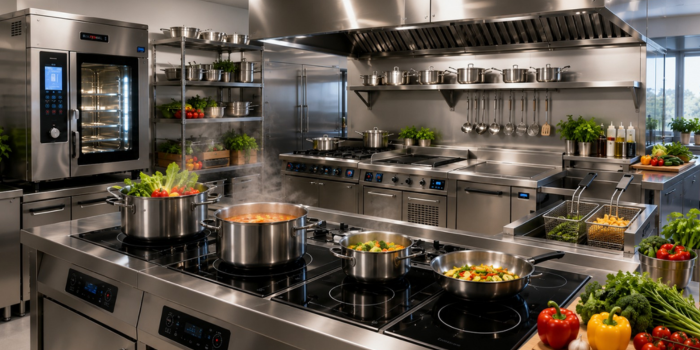
Running a successful restaurant is no longer just about serving delicious food. Today’s customers expect quick service, consistent quality, and a seamless dining experience every time they visit. Behind every satisfied customer is a kitchen that operates efficiently under pressure. Whether it is a restaurant, hotel, cloud kitchen, catering service, or institutional kitchen, productivity plays a major role in determining daily success.
Many business owners believe that increasing output requires expanding the kitchen or investing in a larger facility. While additional space may seem like the obvious solution, it is not always the most practical or cost-effective one. Renovation projects can be expensive, disrupt business operations, and take months to complete. Fortunately, many productivity challenges can be solved without adding a single square foot to the kitchen.
The secret lies in making better use of the available space, improving workflows, organizing workstations, selecting efficient equipment, and creating systems that help employees work smarter rather than harder. Even small operational improvements can produce significant long-term benefits.
A commercial kitchen should be designed to eliminate unnecessary movement, reduce waiting time, improve communication, and ensure that every workstation contributes to the overall cooking process. Businesses that focus on Restaurant Kitchen Productivity often discover they can serve more customers, reduce operating costs, and improve employee satisfaction without expanding their facilities.
Understand Where Time Is Being Lost
Before making any changes, it is important to understand how the kitchen currently operates. Many restaurants experience delays without realizing where valuable time is actually being wasted. Employees may spend extra minutes searching for utensils, walking between stations, waiting for equipment, or moving ingredients from one location to another.
These small delays may seem insignificant individually, but when repeated hundreds of times throughout the day, they can reduce overall productivity considerably.
Managers should observe kitchen operations during both normal and busy service hours. Watching how employees move through the kitchen often reveals opportunities for improvement that were previously overlooked.
Questions worth asking include:
- Which stations experience the most congestion?
- Where do employees spend unnecessary time?
- Are ingredients easily accessible?
- Are workstations positioned logically?
- Does equipment placement support daily operations?
Answering these questions provides valuable insight into areas that require improvement.
Build an Efficient Kitchen Layout
An organized kitchen is easier to manage than a larger but poorly designed one. The goal should always be to reduce unnecessary movement while creating a smooth operational flow.
A properly designed Commercial Kitchen Workflow ensures that ingredients move naturally from storage to preparation, cooking, plating, and finally to the serving area without interruption.
When workstations are arranged according to the sequence of daily operations, employees spend less time walking and more time preparing food.
Effective layouts generally include:
- Dedicated preparation areas
- Clearly separated cooking stations
- Convenient washing sections
- Accessible storage locations
- Organized plating counters
Even simple adjustments to workstation placement can significantly improve operational speed.
Maximize Every Corner of the Kitchen
Limited floor space should never prevent a business from operating efficiently. Many commercial kitchens fail to utilize vertical storage and unused wall areas effectively.
Applying Kitchen Space Optimization allows restaurants to increase storage capacity while keeping work areas clean and organized.
Some practical ideas include:
- Installing wall-mounted shelving
- Using hanging utensil systems
- Adding overhead storage racks
- Utilizing mobile preparation tables
- Organizing ingredients in stackable containers
- Creating labelled storage sections
Keeping frequently used items within easy reach reduces unnecessary movement and supports faster food preparation.
Invest in Equipment That Improves Efficiency
Equipment has a direct impact on daily productivity. Outdated appliances often consume more energy, require frequent maintenance, and slow down operations during busy periods.
Modern Commercial Induction Equipment offers faster heating, improved temperature control, and better energy efficiency. It also produces less ambient heat, creating a more comfortable working environment for kitchen staff.
Benefits of upgrading include:
- Faster cooking times
- Consistent food quality
- Improved safety
- Lower energy consumption
- Easier cleaning
- Reduced maintenance requirements
Choosing equipment that performs multiple functions can also save valuable workspace while improving operational flexibility.
Standardize Daily Kitchen Procedures
Consistency is one of the biggest factors influencing kitchen performance. Every employee should understand exactly how each task should be completed.
Developing standard operating procedures helps eliminate confusion while improving coordination among team members.
These procedures should cover:
- Ingredient preparation
- Cooking processes
- Cleaning routines
- Equipment operation
- Food safety practices
- Closing procedures
When employees follow the same methods every day, productivity naturally increases and mistakes become less common.
Improve Communication Between Teams
Communication failures often create delays that have nothing to do with kitchen size. Chefs, assistants, servers, and managers must work together as one coordinated team.
Restaurants can improve communication by:
- Conducting daily team briefings
- Assigning clear responsibilities
- Using digital order display systems
- Confirming special customer requests
- Reviewing completed service after every shift
Good communication reduces errors and keeps food moving smoothly through every stage of preparation.
Support Long-Term Business Growth
Improving efficiency is not just about today’s operations. A productive kitchen creates opportunities for future expansion without requiring major structural changes.
Businesses that optimize existing resources often experience:
- Faster service
- Lower operating costs
- Higher employee satisfaction
- Improved food consistency
- Better customer experiences
- Stronger business reputation
- Increased profitability
- Greater operational flexibility
Choosing Professional Kitchen Solutions enables businesses to adapt to changing customer demands while making the most of their available space.
Conclusion
Expanding a kitchen is not always the best way to improve operational performance. In many cases, better organization, smarter workflows, efficient equipment, and well-trained employees can produce far greater results than additional square footage. Every commercial kitchen has untapped potential that can be unlocked through careful planning and continuous improvement.
By evaluating existing processes, optimizing layouts, maintaining equipment, organizing storage, and creating efficient working systems, restaurants can increase capacity, improve service quality, and reduce operating costs without expensive renovations. Small improvements implemented consistently lead to lasting success, helping businesses serve more customers while maintaining the high standards expected in today’s competitive hospitality industry