The Commercial Kitchen Industry Is Entering a New Era
In 2026, the food industry is evolving faster than ever before. Restaurants, hotels, cafés, bakeries, and cloud kitchens are no longer relying only on traditional cooking methods. Technology, automation, and intelligent kitchen systems are becoming the driving force behind successful food businesses.
Today, speed, consistency, hygiene, and operational efficiency are more important than ever.
That is why smart kitchens are becoming the future of commercial cooking.
Modern food businesses are now investing in advanced Smart Kitchen Equipment that improves productivity, reduces operational stress, and helps restaurants deliver faster service without compromising food quality.
Traditional Kitchens Are Struggling to Meet Modern Demands
Customer expectations have completely changed.
People now expect quick service, consistent taste, online delivery support, and hygienic food preparation every single time. Traditional kitchen systems often struggle to handle these demands efficiently.
During peak business hours, restaurants face multiple challenges:
- Delayed food preparation
- Staff coordination issues
- Excessive heat inside kitchens
- High electricity consumption
- Equipment breakdowns
- Food wastage
These operational problems directly affect restaurant profitability and customer satisfaction.
This is exactly why businesses are upgrading to intelligent Commercial Food Service Equipment designed for modern high-volume operations.
Automation Is Transforming Commercial Kitchens
One of the biggest advantages of smart kitchens is automation.
Modern kitchens now include automated cooking systems, programmable ovens, intelligent refrigeration units, sensor-based equipment, and digital monitoring systems that improve kitchen efficiency dramatically.
Automation reduces manual workload and helps maintain consistency in food preparation even during busy hours.
Restaurants can now handle larger order volumes while maintaining better speed and accuracy.
This transformation is helping restaurants operate more smoothly while reducing operational pressure on kitchen staff.
Smart Kitchens Improve Workflow Efficiency
In a traditional kitchen, unnecessary movement wastes both time and energy.
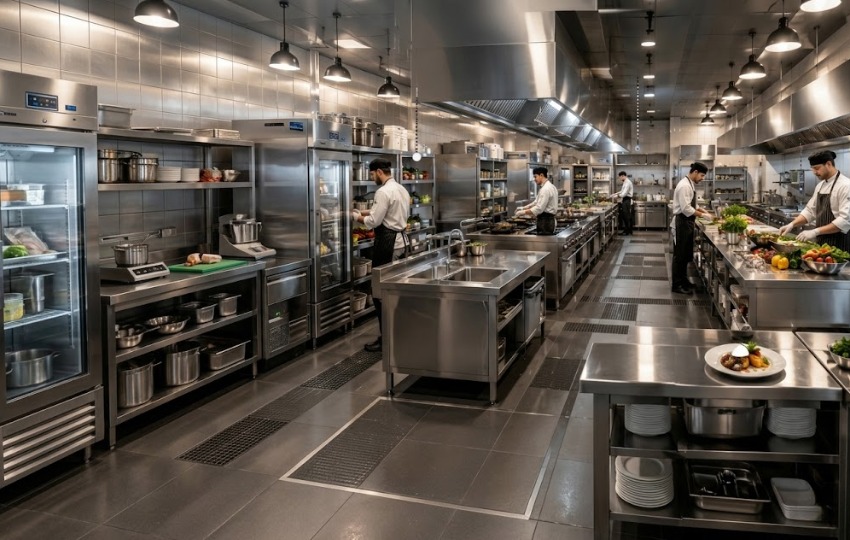
Smart kitchens are designed with optimized layouts that improve workflow between storage, preparation, cooking, plating, and cleaning areas.
Modern restaurants are now choosing advanced Modular Kitchen Systems that maximize space utilization while improving staff coordination and operational speed.
Efficient workflow planning helps restaurants:
- Reduce preparation time
- Increase service speed
- Minimize operational confusion
- Improve staff productivity
- Handle peak-hour pressure efficiently
A properly planned smart kitchen allows businesses to deliver better customer experiences consistently.
Energy Efficiency Is a Major Advantage
Energy costs are increasing rapidly in the restaurant industry.
Smart kitchens solve this problem through energy-saving appliances, intelligent cooling systems, and optimized ventilation technology that reduce electricity and fuel consumption.
Modern Industrial Cooking Solutions are designed to operate with maximum efficiency while consuming less energy compared to traditional kitchen systems.
Restaurants using energy-efficient kitchen technology are reducing operational costs significantly while also supporting sustainable business practices.
This long-term cost saving has become one of the biggest reasons restaurants are investing in smart kitchens.
Smart Refrigeration Protects Food Quality
Ingredient freshness plays a critical role in food quality.
Modern smart kitchens now use intelligent refrigeration systems with automatic temperature monitoring, humidity control, and energy-efficient cooling technology.
These advanced systems help restaurants maintain food safety standards while reducing spoilage and ingredient wastage.
Reliable refrigeration not only improves operational efficiency but also protects restaurants from unnecessary financial losses caused by poor storage management.
Better Ventilation Creates Better Working Conditions
Kitchen environments directly affect staff productivity.
Traditional kitchens often become extremely hot and uncomfortable during high-volume cooking operations. Excess heat slows down performance and increases employee fatigue.
Smart kitchens now include advanced exhaust systems and airflow management technology that improve air circulation and maintain balanced temperatures.
Modern Kitchen Ventilation Equipment helps restaurants create safer, cleaner, and more comfortable working environments for chefs and kitchen staff.
Better ventilation also improves equipment lifespan and reduces maintenance problems.
Cloud Kitchens Are Accelerating Smart Kitchen Adoption
The rapid growth of online food delivery has increased the demand for smarter kitchen infrastructure.
Cloud kitchens operate in highly competitive environments where speed and efficiency determine success. Every second matters during food preparation and dispatch.
That is why delivery-focused brands are investing heavily in compact, automated, and high-performance kitchen systems.
Smart kitchen technology helps cloud kitchens process more orders while maintaining consistency and operational control.
In 2026, smart commercial kitchens are becoming essential for food businesses that want to scale rapidly.
Data and Technology Are Shaping the Future of Cooking
Modern kitchens are no longer just cooking spaces.
Many restaurants are now using digital systems that track kitchen performance, monitor equipment usage, manage inventory, and optimize operational efficiency in real time.
Technology-driven kitchens help restaurant owners make better business decisions while improving daily operations.
This shift toward data-based kitchen management is becoming one of the most important trends in the commercial food industry.
Conclusion
The future of commercial cooking is no longer based only on manual operations and traditional kitchen setups. Smart kitchens are transforming the restaurant industry through automation, energy efficiency, intelligent workflow planning, and advanced cooking technology.
Restaurants that invest in modern kitchen infrastructure today are building faster, more efficient, and more profitable businesses for the future.
From automated cooking systems and smart refrigeration to advanced ventilation and modular kitchen layouts, intelligent kitchen technology is redefining the way commercial kitchens operate.
And when it comes to delivering innovative, future-ready, and high-performance kitchen solutions, Woltura continues to lead the future of smart commercial cooking.